How to get your business recommended by ChatGPT, Perplexity and Google AI
More customers ask AI assistants for recommendations. Here is how generative engine optimization works and what to do so ChatGPT and Google AI mention you.
Short answer: AI assistants recommend businesses they can find, understand and trust. Make your website crawlable by AI bots, state clear facts about what you do and where, mark up your pages with structured data, and build a consistent reputation on the sites these tools read, such as Google Business Profile, directories and reviews.
A growing share of people now ask ChatGPT, Perplexity, Gemini or Google’s AI Overviews questions like “Who builds custom websites in Toronto?” instead of scrolling through ten blue links. If your business is not part of those answers, you are invisible to those customers. The good news: the work that gets you there is concrete.
How AI assistants choose who to recommend
AI answers draw on two sources:
- What the model learned in training from public web content.
- What it retrieves live from search indexes and its own crawlers when it answers. ChatGPT’s search draws on search indexes such as Bing’s, Perplexity runs its own crawler, and Google’s AI Overviews use Google’s index.
In both cases, the assistant favours sources that are easy to access, easy to understand and consistent with what other sources say. That gives you three jobs.
A few terms, defined
- GEO (generative engine optimization): optimizing for AI-generated answers rather than only for a list of links. Some people call it AEO (answer engine optimization) or AI SEO. The work is largely the same.
- Crawler (or bot): software that visits web pages and reads them. Each AI company runs its own, with its own name.
- robots.txt: a text file at
yourdomain.com/robots.txtthat tells crawlers what they may and may not visit. - Structured data: a block of code, usually JSON-LD using the Schema.org vocabulary, that states facts about a page in a format machines read without guessing.
- Entity: the way search engines and AI models think about your business, as one “thing” with a name, location, services and connections, rather than a set of pages.
Job 1: Let the AI crawlers in
- Check your robots.txt. Many sites block AI crawlers without knowing it. Bots to allow include OAI-SearchBot and GPTBot (OpenAI), ClaudeBot (Anthropic), PerplexityBot, Google-Extended and Bingbot.
- Put your content in the HTML. Many AI crawlers do not run JavaScript. If your text only appears after scripts load, they may see an empty page.
- Submit your sitemap to Bing Webmaster Tools, not only Google Search Console. Bing’s index feeds several AI experiences.
- Use IndexNow to notify search engines instantly when you publish or update pages.
Know which bot does what
Not every AI crawler has the same job. Some gather content to train models; others fetch pages to answer a question right now. The companies document them separately, which means you can make a deliberate choice instead of blocking or allowing everything.
| Company | Bot | What it does, according to the company |
|---|---|---|
| OpenAI | OAI-SearchBot | Surfaces websites in ChatGPT search results. Sites that block it will not be shown in ChatGPT search answers. |
| OpenAI | GPTBot | Collects content that may be used to train OpenAI’s models. |
| Anthropic | Claude-SearchBot | Crawls to improve the relevance and accuracy of Claude’s search responses. |
| Anthropic | ClaudeBot | Collects web content that could contribute to model training. |
| Perplexity | PerplexityBot | Surfaces and links websites in Perplexity’s search results. Perplexity says it is not used to train models. |
| Google-Extended | Controls whether content can be used for Gemini models. Google says it does not affect inclusion or ranking in Google Search. |
There are also user-triggered agents, such as ChatGPT-User, Claude-User and Perplexity-User, which visit a page when a person asks the assistant about it. OpenAI and Perplexity both note that robots.txt rules may not apply to these, because a human started the request.
The practical takeaway: if your goal is to be recommended, the search bots (OAI-SearchBot, Claude-SearchBot, PerplexityBot, Bingbot and Googlebot) matter most. Blocking a training bot is a separate business decision about how your content is used, and it does not have to cost you visibility in AI search.
A simple robots.txt that welcomes search and AI search crawlers can be as short as:
User-agent: *
Allow: /

Sitemap: https://yourdomain.com/sitemap.xml
If you or a previous developer added lines such as User-agent: GPTBot followed by Disallow: /, make sure that was intentional.
IndexNow in one paragraph
IndexNow is an open protocol that lets your site notify search engines the moment a page is added, updated or deleted, instead of waiting for them to recrawl. According to indexnow.org, participating engines include Bing, Yandex, Naver, Seznam.cz, Yep and Amazon. Google is not listed. Many website platforms and SEO plugins support it with a single setting.
Job 2: Be easy to understand and quote
AI assistants lift short, factual passages. Write so that a single paragraph can stand on its own:
- Answer first. Start pages and articles with a direct answer, then explain.
- State the facts plainly. “TocheeTech is a digital solutions company in Toronto that builds websites, custom software and AI automation” is quotable. “We are passionate innovators” is not.
- Use specifics. Services, industries, locations served, real results with numbers. Vague claims get ignored.
- Add FAQs that match the questions people actually ask.
- Mark it up with structured data (Schema.org): Organization, Service, FAQPage, Article and BreadcrumbList help machines read your pages without guessing.
- Consider an llms.txt file, a plain-text summary of your business with links to your key pages.
A worked example: rewriting a home page intro
Here is a typical opening paragraph, and a version an AI assistant can actually use.
Before: “Welcome! We are a passionate team dedicated to delivering excellence and exceeding expectations with innovative solutions tailored to you.”
After: “Smith Renovations is a licensed general contractor in Toronto and Mississauga. We finish basements, renovate kitchens and bathrooms, and handle permits for homeowners across the western GTA.”
The second version answers four questions in two sentences: who you are, what you do, where, and for whom. If someone asks an assistant for a basement contractor in Mississauga, that paragraph is a direct match. The first version could describe any company on earth.
Apply the same test to every important page: could a stranger quote your first paragraph and describe your business accurately?
Structured data that matters most
Start with these types, in this order:
- Organization (or LocalBusiness if you serve customers in a specific area) on the home page: legal name, logo, address or service area, phone, and
sameAslinks to your official profiles. - Service on each service page: what the service is and where it is offered.
- Article on blog posts: author, date published and date updated.
- BreadcrumbList on every page, so machines understand how your site is organized.
- FAQPage on pages with real questions and answers.
A note on FAQ markup: Google has scaled back FAQ rich results, and its documentation says the feature is shown only for well-known, authoritative government and health websites. Keep the markup for clarity, since it still describes your content in a machine-readable way, but do not expect extra space in Google’s results from it.
Test your markup with Google’s Rich Results Test or the Schema.org validator. Markup that contradicts the visible page (a different phone number, a service you no longer offer) does more harm than none.
What goes in an llms.txt file
The llms.txt proposal describes a Markdown file placed at yourdomain.com/llms.txt. The only required part is an H1 with the name of your site. The proposal then suggests a short summary in a blockquote, optional details, and sections of links to your most useful pages, each with a one-line description. A small business version can be written in half an hour:
# Smith Renovations

> Licensed general contractor in Toronto and Mississauga. Basements, kitchens, bathrooms and permits for homeowners.

## Services
- [Basement finishing](https://example.com/basements/): scope, process and typical timelines
- [Kitchen renovations](https://example.com/kitchens/): design, permits and installation

## About
- [Projects](https://example.com/projects/): completed jobs with photos
- [Contact](https://example.com/contact/): service area and how to request a quote
Treat llms.txt as a helpful extra, not a replacement for good pages. Support varies from one AI tool to another.
Job 3: Be consistent everywhere
An AI assistant trusts a business more when many independent sources describe it the same way.
- Name, location and services should match on your website, Google Business Profile, LinkedIn, Instagram and directories.
- Link your official profiles from your site and in your structured data (the
sameAsproperty). - Collect reviews on Google and industry platforms such as Clutch.
- Earn mentions in local media, associations and partner websites.
- Publish case studies with real clients and results. They give AI tools evidence to cite.
Consistency is harder than it sounds. A business that moved offices, changed its phone number or dropped a service line often has three or four versions of itself floating around the web. An assistant that finds conflicting facts may describe you wrongly, or leave you out. Make a list of every place your business is listed and update them all at once.
Common mistakes
- Blocking every AI bot by default. Some security plugins and hosting settings do this silently. You lose AI search visibility along with training access.
- Hiding content behind scripts, tabs or images. If a crawler that does not run JavaScript sees an empty page, there is nothing to quote.
- Writing for keywords instead of questions. Assistants answer questions. Pages that answer them directly get used.
- Making claims you cannot back up. Unsupported superlatives (“the best in Toronto”) give an assistant nothing to verify.
- Forgetting the basics. If your site is not indexed by Google and Bing, most AI tools will not find it either. Start with our guide to why a website does not show up on Google.
- Treating it as a one-time project. Fresh, accurate content and new reviews keep feeding the sources assistants read.
A quick GEO audit you can run today
- Ask ChatGPT, Perplexity and Gemini: “What does [your business] do?” and “Who offers [your service] in [your city]?” Note what they get wrong or leave out.
- Search
site:yourdomain.comto confirm your pages are indexed. - Open
yourdomain.com/robots.txtand check that AI crawlers are not blocked. - Test your home page with Google’s Rich Results Test to see your structured data.
- Compare your business details on your site, Google Business Profile and LinkedIn. Fix any differences.
Repeat step 1 every month and keep the answers in a simple spreadsheet. AI answers change often, so a trend over several months tells you far more than any single reply. In your analytics, watch for visits referred by assistant domains such as chatgpt.com and perplexity.ai.
What to ask a provider about GEO
If you hire help, ask:
- Which AI crawlers does my site currently allow or block, and what do you recommend?
- Which structured data types will you add, and can I see them validated?
- How will you make my business details consistent across the web?
- How will you measure whether AI assistants mention us, and how often will you report?
- What part of this is ordinary SEO, and what is specific to AI search?
A good answer to the last question is honest: most of it is solid SEO done well. Anyone promising guaranteed placement in ChatGPT is promising something no one controls.
What this looks like in practice
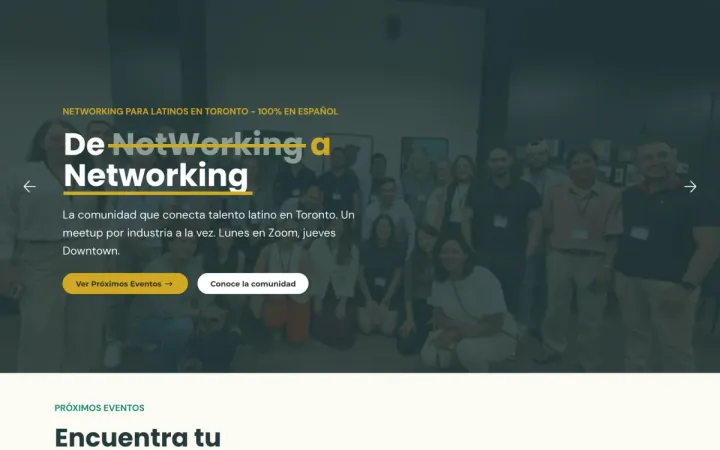
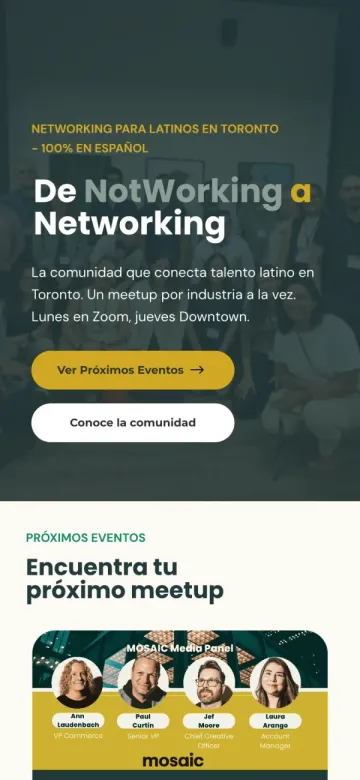
We apply these same practices on the sites we build. Clean HTML, structured data and fast pages are the baseline. Some projects go further: the site we built pro bono for NotWorking to Networking pulls events from Eventbrite and posts from Instagram automatically, so the page stays fresh without anyone updating it, and fresh, accurate content is exactly what search engines and AI tools look for. For QRX Technology, separate English, French and US versions tell search engines which page to show in each market. If you serve customers in more than one language, our guide to multilingual websites in Toronto goes deeper.
The bottom line
GEO is not a trick. It is making sure the machines that now answer your customers’ questions can find you, understand you and trust you. If you want a review of how AI assistants see your business today, get in touch. It is part of our SEO and digital marketing service, and if your site needs structural changes to get there, our web design and development team can handle them.
Frequently asked questions
What is generative engine optimization (GEO)?
GEO is the practice of making your business easy for AI assistants such as ChatGPT, Perplexity, Gemini, Claude and Google's AI Overviews to find, understand and cite. It builds on SEO and adds a focus on clear facts, structured data and a consistent reputation across the web.
Is GEO different from SEO?
It is an extension of SEO. AI assistants still rely on search indexes and crawlers, so good SEO is the foundation. GEO adds content written to be quoted, entity consistency and signals that AI tools read, such as structured data and llms.txt.
What is llms.txt?
llms.txt is a proposed standard: a plain-text file at the root of a website that summarizes what the business does and links to its most useful pages, so AI tools can understand the site quickly. Support varies by tool, but it is cheap to add.
Can I pay to be recommended by ChatGPT?
No. Organic answers from AI assistants cannot be bought. They are shaped by what the model can find and trust about your business online.
Can I block AI training but still appear in ChatGPT search?
Yes. OpenAI documents separate crawlers: OAI-SearchBot surfaces sites in ChatGPT search and GPTBot collects content for model training. You can allow the first and disallow the second in robots.txt.
Does blocking Google-Extended remove my site from Google Search?
No. Google states that Google-Extended does not affect a site's inclusion in Google Search and is not a ranking signal. It controls whether your content can be used for Gemini models.
How do I know if AI assistants are recommending my business?
Ask them directly, with the same questions a customer would, and keep a simple log of the answers every month. Also watch your analytics for visits referred by AI assistant domains such as chatgpt.com or perplexity.ai.
Proof, not promises